
Why It’s Totally Cool If My Kids Skip College

I have a B.A. in Writing, Literature, and Publishing from Emerson College, despite myself.

I mean, there was never a question I would go to college. After all, it never occurred to me that any other path was available.

But I started out studying journalism at the College of New Jersey. I became disenchanted and discouraged by my choice of major. I fell into a depression after both the death of my grandmother and the end of an abusive relationship. I dropped out of college with the certainty that I didn’t need it to be a writer.

Which was true, but I wasn’t sure how to go about making money. I ended up in a crappy retail job, at which I lasted for two months. Is this all I’m capable of without a degree? I asked myself, horrified. It wasn’t, but I didn’t know that. I ended up at Emerson.

After graduating, I was lucky enough to get a job within two months (though not in my field). I was miserable there, and felt relief when I was laid off after six months. A year later, I had my feet planted firmly within the publishing industry. Finally. I was content… for awhile. But I soon realized I had no interest in working my way up the corporate ladder. I wanted to create. I wanted to be my own boss.

And so I made my circuitous way to the here and now, where I’m a happy, and pretty well-balanced, business owner. I’m lucky enough to be one of the few people out there who has ended up making money in the field they studied in college. But I could have gotten here quicker. I could have gotten here without incurring debt. I just didn’t know.

Last weekend, I toted my copy of Michael Ellsberg’s The Education of Millionaires to my yoga/cooking retreat up in VT, where I devoured it during the free time I had between yoga and cooking classes. As I read, I found myself giving a silent hells yeah as Ellsberg gave voice to something I had always felt when it comes to academia.

“Despite sixteen years or more of schooling,” he writes, “most of what you’ll need to learn to be successful you’ll have to learn on your own, outside of school, whether you go to college or not.” He goes on to describe a scene that’s decidedly familiar these days:

“We now live in an age when it is likely that the person pouring you your coffee at the cafe in the morning has spent four years studying literature, or even business and marketing, in a degree-granting institution. That person is likely to be carrying tens of thousands of dollars in student debt, and more in credit card debt accrued in college, for the privilege of having studied to pour you your coffee with such literary and business acumen.”

I thought of my time on unemployment. A full year. I thought of how humiliated I had been to stoop to temp work, handing out food samples at donut shops and supermarkets. I thought of how my life might have been different if I’d aimed for entrepreneurship rather than employment. But the possibility had never occurred to me. That only came later.

Ellsberg goes on to advocate self-education over academia — a pursuit I’ve come to advocate heavily in the past five or so years –providing readers with a resource-heavy curriculum in the areas of networking, marketing, sales, and entrepreneurship. At the end, he describes the “education bubble,” exploring further why a single-minded reliance on academia may cause the bubble to eventually burst.

At the end, I’m both inspired and introspective. I feel validated. I think to myself: College and the corporate ladder aren’t the only options. and my future children will know that, and will be supported in whichever path they choose.

I enjoyed my time at Emerson. I developed as a person, and met people there who are still incredibly important to me.

But did college hold me back? Would I be even more successful now if I’d gotten an earlier start on the entrepreneurial path?

I’ve learned more in the past five years than I ever learned in the previous 26. This much is true.

What will you tell your children?

Related: Forget Grad School. Is Your B.A. Worth It?, Coffee Break: Home Ec for Entrepreneurs, Passive/Aggressive: Finding Work as a Freelancer

You’re Doing Great. You Should Give Thanks and Chill the Eff Out.

In case you forgot, I was at a retreat this past weekend (neener neener). It was glorious, I didn’t have phone or Internet access, and I even found maple cotton candy while I was up there.

But I’m not here to gloat. (Or am I? J/K. Or not.)

I wanted to share something with you.

At the beginning of the retreat, we had a welcome ceremony, during which yoga instructor Erica Mather passed around a talking stick and asked each of us to answer a few questions. Among them: What are you hoping to gain from this retreat?

When it was my turn to speak, the talking stick shook in my hands. My eyes teared up. What was I looking for? I had been feeling a lot of anger and frustration lately, both from the continued lack of interest in our condo, and in my continued failure to get pregnant. I told the group before me that I was looking for calm.

At the end of the retreat — five yoga classes, five cooking classes, two hot tub sessions, a greenhouse field trip, a journaling session, and a s’mored up, drunken bonfire later — we passed around the talking stick again. What do you feel gratitude for? Erica asked us. What have you learned?

By that point, it was clear I’d received something much better than simple calm. I’m grateful that I was able to experience something like this, I told the group. I learned that I have a lot to be grateful forso I should just chill out.

A year ago, I wouldn’t have been able to take this trip. At the time, I was working a permalance gig, at which I was overworked and underpaid. I had also completed a career coaching certification program, but was failing to bring in clients, despite several contests on my blog, an e-course experiment, and a successful Word Nerd Networking event. I struggled to pay the bills, and was consumed by the thought that I was probably failing.

Now? I’m only two months away from eradicating the last of my credit card debt. The other month, I was able to splurge on a yoga studio membership. And this month? I was able to go on a mothereffing yoga/cooking retreat.

It’s just… wild.

It’s not Thanksgiving yet, but I don’t think it’s too early to give thanks for the circumstances that have brought me to this place:

  • I’m grateful my parents believed in me enough to lend me the money for my career coaching certification program. At long last, their investment appears to be paying off.
  • I’m grateful to my husband for spending many, many hours making my website pretty, setting up an e-course platform, giving me e-commerce capabilities, and more.
  • I’m grateful to the writing opportunities that have come my way as a result of the work I’ve done, and the people I’ve met.
  • I’m grateful to have learned my worth, learned how to negotiate… and learned how to walk away.
  • I’m grateful I was finally able to muster up the courage to cut that permalance safety net loose and, as a result, begin earning the money I deserve.
  • I’m grateful to the people I’ve met not only through work, but also through Twitter, Brazen Careerist, the YEC, and this blog. I love how we support each other.
  • I’m grateful for being able to find gratitude in the midst of the anger that has overwhelmed me lately.

I haven’t reached my full potential yet. Obviously. But I have a lot to be grateful for, and I need to remember that. I need to remember how lucky I am.

Have you been feeling angry lately? Frustrated. Anxious or scared or jealous or desperate? Your feelings aren’t invalid by any means, but ask yourself: What do you feel gratitude for?

Related: Looking for Fulfillment? Don’t Hold Out for Perfect, Inch By Inch: How Small Steps Lead to Big Success

Spill It: Do You Unknowingly Waste Your Best Stories?

Tomorrow morning, I’m heading up to Good Commons in Plymouth, VT, for a Revitalize Retreat organized by healthy travel organization Pravassa. I don’t travel (or unplug) often, and I’ve never taken a vacation alone. But I’m looking forward to daily yoga classes, and cooking classes during which we’ll prepare farm fresh meals. I’m looking forward to field trips to nearby sustainable farms. I’m looking forward to soaking in the hot tub, and stuffing my face with s’mores at the fire pit. I’m looking forward to spending quiet hours with my stack of books (Michael Ellsberg’s The Education of Millionaires, Elizabeth George’s I, Richard, and Karen Russell’s St. Lucy’s Home for Girls Raised by Wolves), and to meeting other blissed-out, beginner yogis.

When I told my yoga instructor about the trip, he was all, “Cool! Are you writing about it!?” And then I hemmed and hawed and finally admitted to him that it hadn’t occurred to me.

But this is only half true. Another part of me had thought about it in passing, and had then decided that I wouldn’t be able to come up with a compelling story angle. Or that it would be too much of a long shot to sell a story that wasn’t about sex. And was it worth the effort? Wasn’t I supposed to be having fun? Unplugging?

I do this all the damn time. Not that my life is a non-stop party, but what about that casserole competition I enter every year? What about the traveling potluck I partake in? What about my very first trip to a fertility center, or my very first trip to a biker bar? Aren’t these story-worthy? Am I surrounding myself with wasted opportunities? Or should I feel okay about not mining every aspect of my life for my writing?

I guess I’m allowed to slack sometimes, but I feel as if it happens way too often. And considering how burnt out I can get on sex writing, I should probably branch out into other content areas. So what holds us back from writing about our outside-the-niche experiences, and how can we push back?

1. It doesn’t occur to us to write about that awesome, fantastic, one-of-a-kind experience, because it’s not work-related. 

Our minds should always be open to new story ideas, and this means analyzing every experience and interaction with a writer’s eye. Show interest in others’ stories. And show interest in your own, too. Look through your calendar and ask yourself: What can others gain from this super-cool thing I just experienced?

2. We have trouble coming up with a unique story angle.

So I’m going on a yoga retreat. Big deal. Almost every other writer out there has come to make yoga a big part of their lives, and stories about the transformation they’ve experienced through yoga are a dime a dozen. There are even hybrid yoga/writing retreats! No one cares about my experience!

This kind of mindset is poop. Self-defeating poop. Examine your experience from every angle. What sets this one apart from others of its kind? Is there an interesting back story? Did you learn some counterintuitive lesson? Is there a how-to or Q&A that can grow out of this experience? Get creative. I mean, isn’t that your job?

3. We worry about venturing outside our niche.

This is also poop. Plus, I recently wrote about it! Revisit that post to learn more about starting from scratch in a new niche.

Am  the only one who does this? Or do you regularly use new experiences to break into new niches?

Related: Freelance Dilemma: Brainstorming New Ideas

Are You a Typical Freelancer?

When Thursday Bram approached me with the idea of a post exploring the idea of the “typical” freelancer, I was intrigued. I’m of the mind that there’s no such thing as “typical,” that the best freelancers carve out their own, unique path, and that a successful freelance career can look different to every freelancer. But as Thursday points out, beginning freelancers often want to know the right way to do things. They’re desperate for answers. So what does the typical freelance path look like? Thursday — a full-time freelancer and the co-founder of  Enhanced Freelance, a membership site for freelancers ready to up their game — has your answers.

“So, are you a typical freelancer?”

The question honestly threw me. It came from a woman who was considering becoming a freelancer herself, who was trying to figure out what she needed to make the leap.

I told her no, explaining that I started freelancing in high school, continued (along with some odd jobs) through college and went full-time right after graduation. I didn’t know a lot of freelancers who hadn’t had a solid nine-to-five for quite a while.

But the question got me thinking. What’s the typical career path of a freelancer? Is there a right way to do things that guarantee that, when you’re ready to strike out on your own, you get it right?

There’s a lot of standard advice that seems to point to a “right” way to freelance: You’re supposed to take a decent enough job that will let you get established and earn some money. You’re supposed to start taking on freelance work on the side, building up a killer portfolio and a client list that keeps you busy every single hour you’re not in the office, along with a nice fat savings account. And then, when you’re about to collapse from the workload, you’re supposed to quit your day job — probably negotiating to keep your ex-employer as a client — and freelance full-time.

The problem is that while I know a handful of freelancers who followed that route, they’re something of a rarity. It’s definitely not what I did. It’s not the path taken by anyone who decides to freelance so they can stay home with the kids. It’s not what happens to someone who gets fired and starts freelancing so there’s still money coming in. And, it’s really not what happens to anyone who gets fed up and tells the boss where to stick it on the way out the door.

Once you’ve gotten started, the question of where your freelance career can take you gets complex. For many of us, the goal is first and foremost to build up a list of clients that pay us a lot of money — but just how much is a lot can vary. There are freelancers who make six figures a year just from client work. That route requires choosing high-paying clients and work. But because most of us bump into the fact that there are literally only so many hours in the day that we can work, there are a lot of other paths that freelancers take:

  •  Teaming up with other freelancers to create an agency
  • Subcontracting out work and building a team of your own
  • Creating products that answer some of your clients’ questions
  • Building products based on your expertise in other areas

The different routes a freelancer can take are endless. The only one that I would recommend against is not moving forward at all. It can take some trial and error to find the right approach to freelancing for your personal interests and priorities, but the alternative is just picking up work as you come across it. That approach can make you money but it can also let you stagnate. Don’t be the freelancer who doesn’t make a change in her career for years at a time.

Related: Wanted: The Career Equivalent of an Open Marriage

How to Start from Scratch with a New Niche

This is a metaphorical lump of dough.

Like any good love affair, even a thriving writing career can get into a slump. And by “slump,” I’m not referring to the lean times in your typical feast-or-famine cycle. I’m referring to a successful business that — for some reason or another — you just feel bored with.

You know the feeling: Every targeted press release seems to say the same thing. Every forthcoming book you’re offered for review seems to have the same premise. And when your favorite sex toy purveyor offers you the latest and greatest vibrator with all the bells and whistles, you just feel meh.

While your niche may once have been a passion (and perhaps still is), it doesn’t seem to leave room for all the new interests in your life.

But is it worth it to switch gears? Will food editors be interested in a piece from a veteran health and wellness writer? Will tech editors care what the go-to sex columnist has to say?

I’m not the same person I was 10 years ago. Way back when, after stumbling upon an internship creating adult content for a personals site, I threw myself into the sex content niche for very personal reasons. I was interested in exploring sex positivity within the contexts of feminism, sexual dysfunction, and past abuse.

These days, I’m cool with the sex writing, but it’s not all I am. I also sing funeral masses. I love hoop dancing. I’m addicted to yoga. I’m a disaster in the kitchen, but I love cooking, too. I go wine tasting with my husband. And I’m a crazy cat lady.

Gee whiz. It sure would be fun to write about those things, too.

And I can but, in order to succeed, I need to take a lesson from those days when I was just starting out. Luckily, while I may — for the most part — be starting from scratch, I still have one of those pre-made crusts to work with. (Too much? Too corny? To hell with it.)

Step One — Research New Markets:

As has become pretty apparent here lately, I have a new hobby. It involves doing headstands and acquiring a hot ass. I’m also into dance-based workouts like belly dancing and hoop dancing, have been doing callanetics for 12 years, walk wherever I can, read books like French Women Don’t Get Fat and The Flex Diet, and enjoy cooking things from scratch. So why the hell does my writing only focus on sexual health?

Wanting to rectify that, I recently took a field trip to Barnes & Noble and picked up copies of Om Yoga & Lifestyle, Yoga Journal, Women’s Health, Fitness, and Whole Living. I flipped through the magazines, bookmarking the masthead, making note of the story layouts, and familiarizing myself with the various magazine sections. I asked myself: What story could I write to fit this publication?

If you’re considering a new market, you should do the same. Visit your local bookshop and browse the magazine racks. Check out mediabistro’s How To Pitch series, which allows you to search publications by category. Search sites like Alltop by subject matter, or scour the blog rolls on popular blogs. And of course, there’s always the good old Writer’s Market.

Step Two — Expand Your Network:

You have 1,981 followers on Twitter. The entire Internet knows about your experience with the Sexerciseball. At this point, all the “how to boost your libido” blog posts and mythology-based erotica essays are coming to you. But you know what’s not coming to you? Anything that’s not about your vagina. Obviously, you need to expand your circle in new directions.

Use sites like LinkedIn or Twitter to find contact info for the editors at your new dream magazines. (And while the mediabistro How To Pitch articles may not be up to date in terms of contact info, you can always use them to snag a magazine’s email format and then pop in the latest names on the magazine’s masthead.) Send these editors LOIs (letters of interest), or ask them if they’d be up for an informal chat about their experiences within a niche. Tell them you’d love to hear more about what they’re looking for. (I’ve landed many lunch invites this way.)

Or connect with other freelance writers who are active in a subject area you’d like to expand into. Having a strong freelance network is key for swapping tips, clips, stories, advice, and sometimes even important contacts. I never would have written about my cats for Petside, for example, without a tip from a fellow freelancer writer. The site just wasn’t on my radar.

Finally, attend networking or industry-specific events. As a sex writer, I’ve attended my share of dating blogger happy hours and dating site parties. Do your homework and see if the writers in your new niche are doing something similar. Or attend those professional conferences in order to make valuable industry contacts or gain inspiration for future stories. For example, if you’re looking to break into Psychology Today, check out Psychotherapy Networker to see what’s what in the world of the mind.

Step Three — Start Small:

Despite being a total sexpert, I once wrote the Ultimate New Jersey Wine Tour for a regional magazine based upon the strength of my pitch alone. And I’ve written a roundup on fitness classes that make you laugh for a newer, regional magazine. While it helped that my query letters were kick-ass (more on that in the next step), the fact that I was aiming for regional — rather than national — markets was probably also a factor. Oftentimes, the smaller publications are far more willing to take a chance on new writers.

So if you’re having a hard time getting in the door at the major glossies, pretend you’re building up your portfolio all over again and aim a bit lower.

Step Four — Wow Them With Your Letter:

I’ve raved about the importance of a strong letter in the past. And I’ll do it again. When you’re lacking clips in a certain niche, a strong query letter can showcase your writing ability, spotlight a brilliant idea, and act as proof that — despite the skimpy portfolio — you’re the best writer for the job, whether because of expert contacts, personal experience, or certified expertise.

Step Five — Don’t Discount Your Prior Experience:

This is where that pre-made crust comes in. (And I always cheat by using the pre-made crust though, in this case, I think you’ve earned it.)  Basically, even though you’re a newbie to the niche, you still have a leg up by being an established, professional writer. What does this mean? It means that you have a proven track record of producing  brilliant content under deadline. It means you know your way around an expert interview, and rock the house at research. It means you have an already-existing readership. It means that you’re worth those professional rates.

So please. For the love of god. Don’t shortchange yourself. Realize that if you did it before, you can do it again.

And p.s. Don’t be a wuss. Always negotiate for higher rates. You’re worth it.

Related: 10 Ways To Prove Experience… Without Any, Cornering the Market? Or Feeling Cornered?, Need New Material? Try Living Your Life

Want Freelance Success? Watch Your Health

At the beginning of June, I started ghostwriting an ebook with a very aggressive timeline. I didn’t take on many other projects during that time, aside from a blog post here and there, and some copyediting work. I also didn’t take breaks for lunch. I stopped going on my afternoon walks. My topless living room yoga sessions became far less regular. And I ate a lot of takeout Chinese.

Finishing that project (the last of the edits were completed in mid-August) was like coming up for air. It was freeing, but I also felt burnt out and unmotivated. I lost all momentum. For weeks, I did the bare minimum, telling myself I’d get back in the saddle after “that trip” or “that holiday weekend.” But I never did.

Then I started making yoga a bigger part of my life* and, suddenly, I was able to jump into new coaching work, start singing funerals again, and write a book proposal. Magic? Not quite.

Yesterday, I had a free wellness coaching session with Linda Formichelli. I had previously only known Linda as a freelance guru and writing coach, but I was intrigued when she announced the launch of HappyFit Coaching. To me, it made sense to see her expand her business to include health and wellness. Why? Because incorporating exercise and other positive health practices into your work day is about much more than achieving optimal work/life balance.

In chatting with Linda about my love affair with yoga, I admitted to her that, aside from making me feel stronger, more balanced, and more toned (you should check out my ass), yoga has also:

  • helped me wake up in the morning, making the transition from sleep to work a lot less excruciating.
  • given me a much-needed break in the middle of the day, allowing me to come back to the computer screen feeling refreshed and ready to kick some ass.
  • stretched me out, which is great when you experience chronic back, neck, and shoulder pain from being hunched over your computer for the majority of your existence.
  • quieted my mind, which is nice when you’re stressing the eff out over late-paying clients, scope creep, deadlines, and life in general.
  • helped me get to sleep at night, which was previously impossible due to my inability to turn my brain off.

In short, being healthier made me a lot more productive.

Wouldn’t you like some of that?

Your own healthy habits don’t have to include yoga, but they should include activities that invigorate you, stretch you out, and give you an endorphin high. You should also eat nutritious meals (the pre-cooked chicken wings at the supermarket don’t count), so that you feel less horrifically sluggish, and you should make sleep a bigger priority. No more all-nighters, yo!

I’m not a health professional (which would be obvious if you ever secretly observed me), but I can point you toward some of the things that have inspired me to lead a healthier life. French Women Don’t Get Fat, for example, taught me a lot about mindful eating. And The Flex Diet – which isn’t actually a diet — provided me with lots of suggestions for eating healthier and enjoying my workouts.

And if you can’t afford a gym or studio membership, no worries. I rent belly dancing, hoop dancing, and yoga DVDs from Netflix all the damn time. Oh. And walking is free. (Don’t ask me to run, though. I don’t go above a power walk.)

Have you been giving your health short shrift? Do you think it may be negatively impacting your work? What one health-related change can you make to your day in order to boost productivity?

*Why yes, I AM obnoxiously obsessed with yoga lately. I”m sorry. You’re gong to have to deal with it. I’l try to mix up the yoga mentions with photos of my cats.

Related: How to Work from Home Without Losing Your Mind, Better Than Xanax

Looking for Fulfillment? Don’t Hold Out for Perfect

For the past seven years, I’ve had a love affair with the self-help genre. I’ve devoured books like Only French Women Get Fat and The Flex Diet looking for solutions to my body hate. I’ve gobbled up books like Introvert Power looking for validation. I’ve read and re-read books like Naked, Drunk, and Writing and The Boss of You, chasing career success. I’ve turned to cliche classics like Don’t Sweat the Small Stuff in order to manage my mood.

There’s a lot of hate out there for self-help books, from people saying they provide false promises and lead readers to fruitlessly pursue perfection. And while I don’t look at these books as the answer to my everything, instead opting to apply what resonates with me and leave the rest, there’s definitely truth to the fact that people have a hard time being happy unless they feel they’ve achieved it all.

The other week, J. Maureen Henderson of Generation Meh wrote something on Salon that resonated with me. She described happiness as a jigsaw puzzle we could only lay claim to “once we’d carefully laid all of the pieces — careers, relationships, sense of self — into their rightful place.”

It was something that rang true.

My mood has been on a downswing lately, and I’ve spent an awful lot of time focusing on the worst parts of the past year and a half.

Our condo, for example. We put it on the market last summer, and have seen a pointed lack of interest since then. It’s frustrating to have half of our stuff in storage (making our condo look extra-spacious for the people who never come to see it). It’s frustrating to send my cats to live in my parents’ garage during open house season (to keep the condo clean, and to keep our association from finding out we have pets). I hate feeling so helpless, and I hate feeling unable to move forward.

Then there is the fact that I stopped taking all of my antidepressant and anti-anxiety medication two years ago, because I wanted to be chemical-free when I eventually got pregnant. The lack of success in that department hasn’t done much for my state of mind. Today, I’m calling a fertility center to schedule tests for both me and Michael so we can find out if there’s a problem, or if we’re just god-awful at babymaking sex.

And of course, Michael and I almost separated.

I know there are those who are (much) worse off than us. But knowing doesn’t always help. Because I want all the pieces. I want all the pieces of that puzzle in place.

The thing is, it doesn’t help to fixate on the things you can’t control.

The other week, I read Kripalu Yoga, and it listed five yamas (restraints) and five niyamas (observances) the Indian sages felt we should strive for. One niyama was santosha, or contentment. Contentment was defined as “joyfully accepting whatever life provides and not wanting more than is at hand.” I began to think of what I had at hand. What I could control, and what I was succeeding at.

I thought of my career.

According to an industry report recently released by the International Freelancers Academy, “the economy’s impact on freelancers has not been quite as severe as reported. The majority of freelancers (52%) either have not been impacted by the economy or have faced only a very minor impact.” Not only that, but 59 percent of freelancers feel more secure as a freelancer than they did working for someone else, and 39 percent are now earning more than they did as an employee in the same field.

For me, this is all true. Freelancing has given me more control than I’ve recently felt in any other aspect of my life. And while my definition of success may differ from yours, when I think of my career now, I feel successful.

Where can you create contentment in your life? Where can you find control?

The LinkedIn Lowdown: How To Pump Up Your Social Media Campaign

I'm quoted in here, yo.

I create content for online magazines. I blog here at Freelancedom. I spend way too much time on Twitter. I get all my news from whatever I happen to be subscribed to in Google Reader. I spend my days seated in front of this laptop and, when my phone rings, I get confused. Why didn’t they just text or email? I wonder. (God I’m a recluse.)

My husband, meanwhile, works full-time for SocialFlow, a social media startup that optimizes tweets. He has a web development business on the side. He’s always glued to his Droid, and he uses Foursquare even when we’re at the goddamn recycling center.

His best friend says we’re “so Web 2.0.”

Yet I avoid Facebook. I’m not as active on LinkedIn as I should be. And when Google+ launched, I wanted to flee the country (or at least my inbox). Am I missing marketing opportunities?

I’m not one to embrace every social media site out there. I believe in figuring out where your audience hangs out, and participating accordingly. In fact, I wrote a lot about this — and other ways to avoid social media fatigue — here. But active participation on a handful of social media sites can really boost your traffic, your visibility, and your career.

LinkedIn, for example, has increased my visibility even without my active participation. I’ve even landed several lucrative projects through the site. Imagine what I could do if I joined some LinkedIn groups and jumped in on the discussions happening there. Imagine what I could do if I started reaching out to more people, and swapping recommendations, instead of passively accepting a small number of connection requests.

Yes. Imagine.

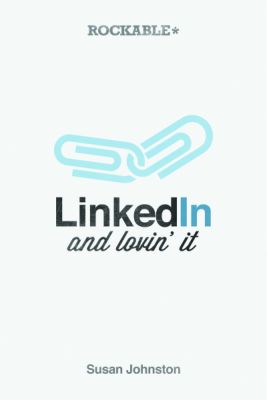
Unfortunately, I’m too damn lazy. But I do know what can be achieved with even a little bit of effort, and I’ve seen results from these (tiniest of) efforts, which is why — I suppose — Susan Johnston was good enough to interview me for her recent ebook, LinkedIn and Lovin’ It.

Published through Rockable Press — an online publisher offering detailed how-to guides and resources for web professionals — LinkedIn and Lovin’ It places a magnifying glass over one of the most popular — yet still underused — social media networks out there, and shows readers the marketing possibilities they’re missing. In fact, this book is so in depth that it even provides readers with the step-by-step on how to set up their own profiles, going into the nitty-gritty of headline writing, resume creation, photo uploading, and how to include external links.

It goes on to cover:

  • the ins and outs of building your online network
  • ways of maximizing your LinkedIn presence (and establishing yourself as an expert in your field)
  • conducting research
  • finding jobs
  • and more.

What I love about this book — aside from the fact that it contains concrete steps for boosting your online presence, helpful case studies, and… um… me — is that, despite how much I thought I already knew, this books goes even deeper. I walked away from it feeling inspired to do even more with my account. Because, honestly? Why wouldn’t I take advantage of a smart and easy way to bring in more eyeballs?

LinkedIn and Lovin’ It will become available later this month. In the meantime, you could always consider boning up on another aspect of online media. WordPress design? Facebook marketing? Freelancing? Copywriting? Rockable Press [<----- That's an affiliate link, FYI] has you covered.

Related: How To Avoid Social Media Fatigue in 5 Easy Steps, Will An Editor Judge You If You Don’t Have An Online Platform?, Using Twitter To Achieve World Domination (in Your Field), How To Market Yourself: Strengthening Your Web Presence

Spill It: Are You Working Through the Long Weekend?

Michael and I were supposed to travel up to Vermont this weekend for an incredible Labor Day Food, Wine, & Rejuvenation retreat. There were going to be daily fitness classes. Kayaking. A field trip to the Green Mountain Sugar Shack. Hot tubbing. A fire pit. A folk and blues festival. Food and wine pairings. Lots of other things. OH MY GOD IT WAS GOING TO BE INCREDIBLE.

Then, Hurricane Irene happened, and Vermont was hit pretty damn hard. The retreat, understandably, was canceled.

My yoga instructor told me I have to find a fun replacement for those canceled plans.

But here’s the thing.

Most of the time, I’d rather be working than doing anything else.

I don’t do relaxing. I don’t do vacations. I don’t do downtime (though I’ve been getting a little bit better at this). This was honestly the first trip I’ve been excited for since I went to Austria at the age of 20 (and that was 11 years ago, yo). I don’t know that I can make this weekend live up to what it was supposed to be. And that makes me seriously bummed.

So I’m sorry about this, but I’m going to have to live vicariously through you. I know it’s a lot of pressure, but I’m going to have to insist that you step away from the computer this weekend and really live it up. And then tell me about it.

In the meantime, I’m going to a potluck tonight (I made mini quiches with leeks and maple bacon!). I’m going to attend yoga class every damn morning.

And I’m going to think wistfully of the maple wonderland that is VT, and what could have been…

Related: Need New Material? Try Living Your Life, Spill It: Do You Work When On Vacation?, Coffee Break: Working on the Weekend